By Rashleigh MacFarlane
The government’s “clean energy” ambitions have been dealt a severe blow by the cancellation of a huge offshore wind farm contract.
The Danish energy company, Orsted, has pulled out of plans to build one of the world’s largest offshore wind farms off the Yorkshire coast. The decision is likely to at the very least force a reappraisal of the various “business plans” drawn up at Cornwall Council to pursue offshore wind farm development in the Celtic Sea.
The County Hall business plans, drawn up by its own wholly-owned company Celtic Sea Power, were already groaning under the weight of hyperbole. Celtic Sea Power's tactic of over-promising while under-delivering can expect to come under renewed scrutiny once the new council is established. So far not a single watt of commercial electricity has been generated, despite consuming millions of taxpayer-pounds.
The promise of thousands of jobs was already being scaled back, with Cornwall warned it would be lucky if the new industrial sector actually created a few hundred jobs locally. Now even that appears years, if not decades, later than promised.
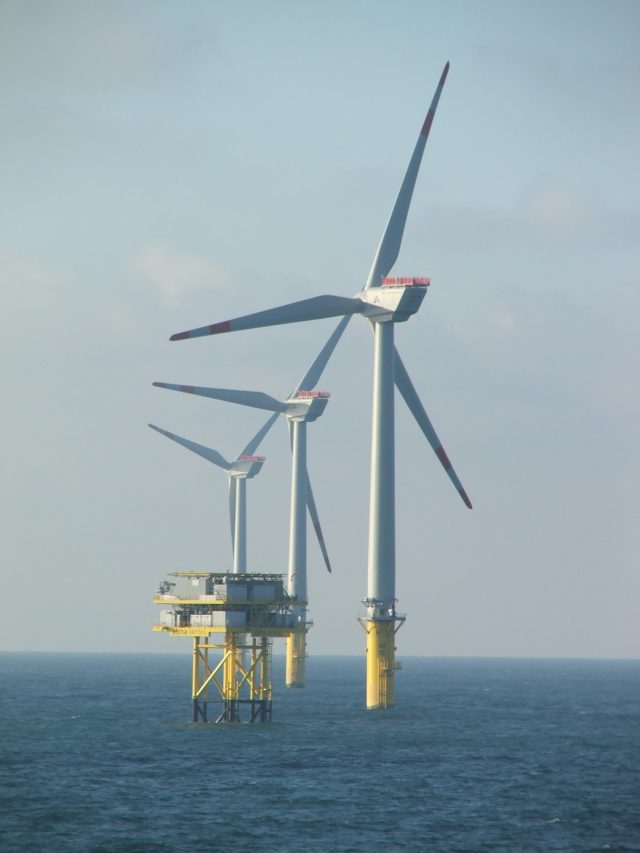
The cancellation of the huge Hornsea 4 project - which was going to power a million homes - has sent shockwaves throughout the entire renewable energy sector.
Orsted said the project no longer made economic sense, despite signing a 15-year contract with the UK government guaranteeing to sell power at an agreed price.
The project had secured a UK Contract for Difference (CfD) in September 2024 but will not proceed in its current form, the Danish developer said.
"Since the award, the project has seen several adverse developments relating to continued increase of supply chain costs, higher interest rates, and an increase in the risk to construct and operate Hornsea 4 on the planned timeline for a project of this scale," the company stated.
"In combination, these developments have deteriorated the value creation of the project and increased the execution risk."
“The combination of increased supply chain costs, higher interest rates, and increased execution risk have deteriorated the expected value creation of the project,” Orsted chief executive Rasmus Errboe added today on releasing the company's first quarter results.
”We remain fully committed to being an important partner to the UK government to help them achieve their ambitious target for offshore wind build-out and appreciate the work they’ve done to deliver a clear framework to support offshore wind.
"However, our capital allocation is based on a strict and value-focused approach, and after careful consideration, we’ve decided to discontinue the development of the Hornsea 4 project in its current form, well ahead of the planned Final Investment Decision later this year.
“We’ve been maturing the project over the past nine months and have been working relentlessly with stakeholders and suppliers to manage the different project risks for a project of this scale.
"Throughout the development phase we’ve been very diligent in our approach to capital commitment to our suppliers, and our committed capital is well below our threshold. The adverse macroeconomic developments, continued supply chain challenges, and increased execution, market and operational risks have eroded the value creation.”
Orsted is the second developer to pull out of a major offshore wind farm project.
The electricity price which the government is underwriting for the current round of Celtic Sea bids is set at a significantly higher price than for this North Sea project. What’s clear is that the supply industry for wind power is badly over-stretched so costs are rising. The government is proactively working to untangle logistic bottlenecks.
But yes, the Celtic Sea projects will be on a scale significantly above those seen in the North Sea and the floating aspect adds another dimension of novelty. Let’s wait to see the outcome of the current round of bids which will very shortly tell us whether companies are tempted by the higher prices on offer. This is frontier technology. Neither of us is qualified to authoritatively judge whether these projects will or will not work commercially. All we can say is that there are serious challenges ahead.
Slightly misleading headline. This project has been cancelled because it doesn’t make economic sense given the cost rises and the agreed price of the electricity. This doesn’t necessarily apply to all offshore projects .
Agree with you Tim. Article is very misleading . The Company has not cancelled the contract and is waiting for the outcome of the next round of licenses to be released which will detail the governments decision on price per kilowatt guarantee. If that is more attractive then it gives the Danish Company Orsted some leverage to negotiate a better deal with the government. Reflecting back to my thirty years career in Offshore Oil & Gas Industry operated under the same principles.